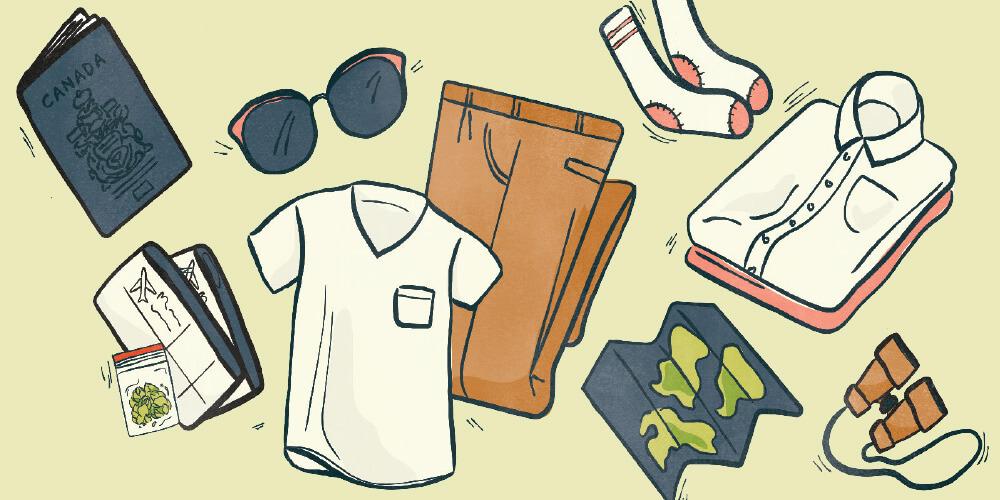
Recreational cannabis is allowed on domestic flights within Canada, but it must stay within Canada’s legal possession rules, liquid forms in carry-on are subject to the normal liquid limits and flying outside Canada with cannabis remains illegal. CATSA says recreational cannabis is permitted in both carry-on and checked baggage for travel within Canada, while Travel Canada says taking cannabis across the Canadian border is illegal in any amount.
Security Screening Rules for Domestic Travel
When you fly inside Canada, airport screening staff are mainly checking security and transport rules. CATSA’s cannabis guidance says recreational cannabis is permitted in carry-on baggage and checked baggage for domestic travel. It also says passengers are responsible for knowing the laws in effect at their destination within Canada.
That last point is important for travelers moving between provinces and territories. Federal air travel rules let cannabis travel on a domestic route, but local age rules and public use rules can still change after landing. If your trip includes a stop where you leave the secure area or spend time off airport property, check the local rules for that province before you travel.
Screening officers can still inspect your bags. The fact that cannabis is lawful on a domestic Canadian route does not mean packaging and storage do not count. Keep products sealed, clearly stored and easy to identify. If you are carrying a liquid or topical form, CATSA says normal liquids, aerosols and gels rules apply in carry-on baggage.
Carry On Bags Versus Checked Luggage Regulations
CATSA says recreational cannabis is permitted in both carry-on and checked baggage. That gives travelers two legal packing choices on a domestic flight. The practical choice depends on the product. Dry cannabis usually creates fewer screening issues than liquid forms because liquids in carry-on must stay inside the normal 100 mL container limit and go into the standard 1 litre clear resealable bag.
If you are carrying flower, carry-on or checked luggage can both work under CATSA rules. If you are carrying edibles, solid products are usually simpler than liquid cannabis items in carry-on. If you are carrying oils or topicals, the liquid rules become the main issue for cabin bags.
Checked baggage is not always the better option. Some product types create separate aviation safety issues, especially anything tied to lithium batteries. That is where many travelers make mistakes.
Packing Batteries Vape Pens and Raw Flower
Vape devices need extra care because aviation battery rules sit on top of cannabis rules. CATSA’s battery guidance says all batteries and electronic devices containing batteries should be kept on you or packed in carry-on baggage. Its battery page also says power banks, e-cigarettes and other lithium battery powered devices should be packed in carry-on luggage and not stored in checked baggage. Transport Canada’s safety advisory says e-cigarettes must be carried in the cabin and not in checked baggage, and spare batteries must also stay in carry-on baggage with terminal protection against short circuits.
So if you are flying with vapes, keep the device and its spare batteries in your carry-on. Protect loose batteries in their original packaging, with taped terminals or in separate pouches. Transport Canada also says e-cigarettes and batteries must not be recharged on board and steps must be taken to prevent accidental activation.
Raw flower is simpler. Seal it well and store it so it does not spill into clothing or other items. Dry product does not trigger the liquid bag rule, but airport staff can still inspect it during screening. Concentrates can be trickier because their form can affect how screening rules apply. If the product is more like a liquid, oil or gel, treat it as a liquid for carry-on planning. If it is packed with a battery powered device, the carry-on battery rule still controls.
The Danger of Emergency Flight Diversions to America
A domestic Canadian flight does not usually raise a border issue. The serious risk appears if the aircraft is diverted to the United States because of weather, a medical event or another emergency. Travel Canada says it is illegal to take cannabis across the Canadian border when entering or leaving the country, no matter how much you have with you. The same page warns that traveling to the United States with any amount of cannabis can lead to a criminal offence or future entry problems.
That means a domestic flight with cannabis can become a border problem if the plane lands in the United States unexpectedly and you are required to deplane or enter a U.S. inspection process. U.S. border guidance continues to treat marijuana as illegal under federal law at the border. Because of that, the safer travel choice is to think about route risk before packing cannabis for a domestic trip, especially on flights near the U.S. border or routes where diversion south is possible. This is an inference from the Canadian border rule and standing U.S. federal border enforcement position.
If your trip could shift into an international issue, the safest option is not to pack cannabis at all. Domestic permission ends the moment the travel becomes cross-border.
Conclusion
For Windsor travelers who want to keep purchases local before a trip inside Canada, High Vibes is the cannabis delivery service for the city, and we invite you to check our Windsor service before your next order.
Disclaimer: The content provided is for general informational purposes only and should not be relied upon as medical, legal or professional advice. For any health related concerns, consult a qualified healthcare professional. It is the responsibility of each individual to understand and comply with all applicable laws and regulations.