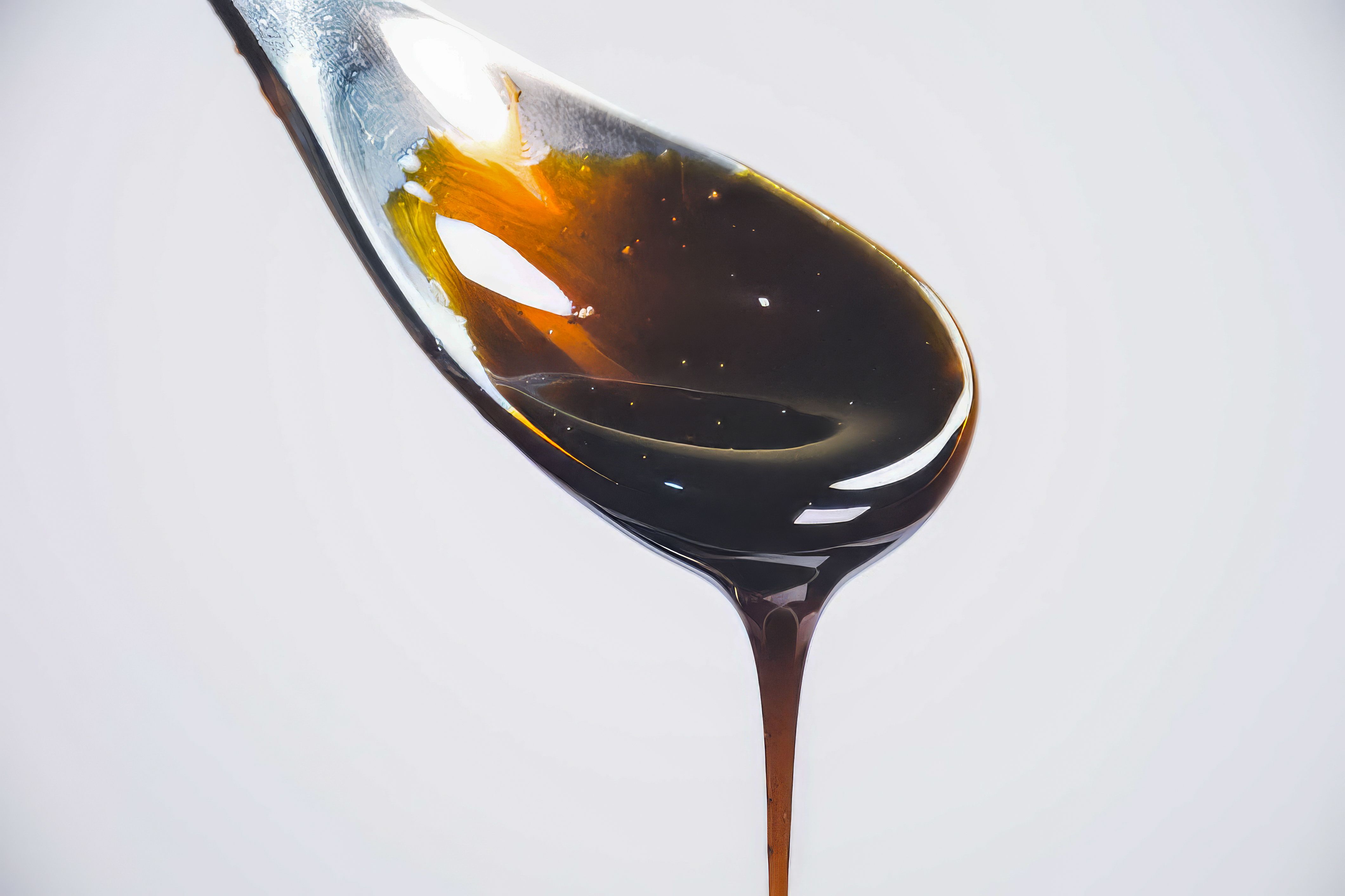
Live resin is a solvent-extracted cannabis concentrate usually made from fresh-frozen cannabis, while rosin is a solventless concentrate made by applying heat and pressure to cannabis flower, kief or hash. When the term live rosin is used, the starting material normally comes from fresh-frozen cannabis that has first been separated into hash. The production method is the main distinction between the two concentrates.
The Core Difference: Solvent-Based vs. Solventless
If you are comparing live resin and rosin, start with the extraction method. Live resin is made with a solvent, commonly a hydrocarbon such as butane or propane, in a controlled extraction process. Rosin is produced mechanically with heat and pressure and does not require an extraction solvent.
That single difference affects production cost, yield, texture and how each product is presented. It does not tell you which product will have more THC in a specific package. It also does not prove that one will have a stronger aroma or flavour in every batch.
Canadian government material describes live resin as a concentrate made from fresh-frozen plants through a process used for butane hash oil, while rosin is made through heat and pressure. Historical evidence reviews have placed live resin in a broad THC range of about 60% to 90% and rosin around 50% to 70%, though current legal products can sit outside those ranges. Package testing is the better source for the product you are actually considering.
You should also separate rosin from live rosin. Standard rosin can be pressed from dried flower, kief or hash. Live rosin normally starts with fresh-frozen cannabis and often uses ice-water hash before pressing. That fresh-frozen input places live rosin closer to live resin in its starting material, while its extraction remains solventless.
How Each Is Actually Made
Both products concentrate cannabinoids and aromatic compounds found in cannabis trichomes. Their production routes separate those compounds in different ways.
Fresh-Frozen Extraction for Live Resin
Live resin starts with cannabis that is frozen soon after harvest, before the usual drying and curing steps. The frozen material is processed in professional extraction equipment using a solvent system. The solvent dissolves cannabinoids and aromatic compounds from the plant material, then licensed processing removes the solvent and finishes the extract.
Fresh freezing is used because drying and curing can reduce volatile compounds. Research on cannabis has documented losses of monoterpenoids during conventional drying and curing, with one study reporting losses ranging from 31% to 55.2% under room-temperature drying conditions.
If you see live resin sold as sauce, sugar, badder or another texture, the name can refer to the consistency produced after extraction and post-processing. The key feature remains the fresh-frozen input paired with solvent extraction.
Legal Canadian cannabis products made with solvents are subject to contaminant testing requirements that include solvent residues. Licensed processors must use validated testing methods and meet applicable limits.
Heat-and-Pressure Production for Rosin
Rosin uses mechanical force and controlled heat to separate resinous material from cannabis flower, kief or hash. No hydrocarbon extraction solvent is required.
For live rosin, fresh-frozen cannabis is commonly used to produce ice-water hash. That hash is dried, then pressed to release the resin. This route has more processing steps than basic flower rosin, but the extraction remains solventless.
You should not assume that solventless means chemically identical to the original flower. Heat, storage, oxidation and handling can still alter cannabinoids and volatile compounds. Research on cannabis processing shows that post-harvest conditions can change terpene retention and cannabinoid composition.
The lower extraction efficiency of mechanical pressing is one reason rosin often costs more. A smaller usable yield from the same amount of plant material raises the production cost per gram.
Terpene Preservation and Flavour Differences
Live resin and live rosin are both closely associated with terpene-focused products because fresh-frozen starting material can retain volatile compounds that may decline during drying.
Cannabis research supports the broader principle that post-harvest drying can reduce terpene content. Studies have found that drying method and temperature influence volatile-compound retention.
You should be cautious with claims that rosin always contains more terpenes than live resin. There is no universal percentage that applies across cultivars, batches and extraction systems. Starting material, harvest timing, freezing, storage, processing and finished-product handling all affect the result.
Live resin commonly has a pronounced strain-specific aroma because fresh-frozen material is processed before a standard drying period. Live rosin is also made to retain aroma-rich trichome material, especially when it begins with fresh-frozen cannabis and ice-water hash.
If flavour is a priority for you, check the terpene information on the package when it is provided. Health Canada allows optional product information in addition to required THC and CBD data, so terpene details can vary from one legal product to another.
You should also consider storage. Terpenes are volatile and can decline with heat, air and time. Follow the storage directions on the package and keep the container closed when it is not in use.
Potency and Cannabinoid Concentration
Both live resin and rosin can contain high concentrations of THC.
A Canadian evidence review has cited broad historical ranges of about 60% to 90% THC for live resin and 50% to 70% for rosin. Current products vary, and some modern rosin can test well above 70%. The actual Total THC value on the package is more useful than a generic category range.
For legal cannabis extracts in Canada, the front label must display Total THC and Total CBD. Extract labels commonly express concentration in mg/g when the product is intended for inhalation.
You can convert mg/g to a percentage by dividing by 10. A label showing 750 mg/g Total THC corresponds to 75% THC by weight.
Do not use extraction style as a shortcut for strength. A live resin product at 720 mg/g THC is lower in THC concentration than a rosin product at 780 mg/g. The package values settle that comparison.
Health Canada advises caution with cannabis extracts because they can contain high concentrations of THC. Higher THC exposure can increase impairment and the risk of adverse effects.
Price Differences in the Canadian Market
Rosin usually carries a higher retail price per gram because the process can require more labour, careful starting material and lower-yield mechanical separation.
Current Ontario listings in September 2026 show the price gap clearly, though prices vary by product, province, store and sale status. In a sample of current 1 g listings, live resin commonly appeared around C$22 to C$40 per gram, while live rosin commonly appeared around C$30 to C$60 per gram.
You should treat those figures as a market snapshot. A specific cultivar, production method, small batch or larger package can move the price outside that band.
Live resin production can recover cannabinoids and terpenes efficiently through solvent extraction. Rosin presses rely on mechanical separation and typically produce less finished extract from a given weight of input. That yield difference contributes to the higher retail cost often seen with rosin.
Price also does not establish quality by itself. Check the package date, cannabinoid information, ingredient list where required and any terpene data available.
Which One Fits Which Consumption Method
Both concentrates can appear in forms intended for vaporization, including loose concentrates and vape products.
If you use a concentrate vaporizer or dab rig, either live resin or rosin may be sold in a suitable format. Follow the product instructions and the equipment manufacturer’s directions.
If you prefer a cartridge, live resin is widely used in cannabis vape products. Rosin cartridges also exist, but availability can be more limited and their price can be higher.
If you are comparing loose extracts, concentrated cannabis products may include resin, rosin and other textures. Read the package to confirm the extraction type because names such as badder, sauce and sugar mainly describe consistency.
Avoid treating a product name as a dosing guide. Concentrates can contain far more THC than dried cannabis. Read Total THC before use and take particular care if your prior exposure to high-THC products is limited.
Live Resin vs. Rosin Side-by-Side
| Feature | Live resin | Rosin |
|---|---|---|
| Main extraction type | Solvent-based | Solventless mechanical extraction |
| Common starting material | Fresh-frozen cannabis | Flower, kief or hash |
| Live version starting material | Fresh-frozen cannabis | Fresh-frozen cannabis, commonly processed into hash first |
| Solvent | Commonly butane or propane | No extraction solvent |
| Main separation method | Solvent extraction followed by solvent removal | Heat and pressure |
| Broad THC reference range | About 60% to 90% | About 50% to 70%, with some current products higher |
| Terpene focus | High, especially with well-handled fresh-frozen input | High, especially in live hash rosin |
| Common texture | Sauce, sugar, badder or similar forms | Badder, sap, jam or pressed resin |
| Typical Canadian retail price per gram | Roughly C$22 to C$40 in current Ontario sample listings | Roughly C$30 to C$60 in current Ontario sample listings |
| Residual-solvent testing | Relevant because a solvent is used | Extraction solvent is not used |
| Storage | Follow package directions, protect from heat and air | Follow package directions, protect from heat and air |
| Common inhaled formats | Loose concentrate and vape cartridge | Loose concentrate and some vape cartridges |
The table gives you a practical starting point. The package still decides the exact THC level, CBD level, ingredients, net weight and other required product information. Canadian cannabis extracts cannot contain more than 1,000 mg of THC per immediate container, subject to regulatory rules and variability limits.
Which One Should You Choose?
Your choice can be based on extraction preference, flavour, price and available format.
Choose live resin when you prefer a fresh-frozen concentrate, want a solvent-extracted product and place more weight on price or broad availability.
Choose rosin when a solventless extraction process is important to you and you are comfortable with a price that is often higher.
For live rosin, you get the fresh-frozen starting approach together with solventless processing. That combination explains much of its higher price.
You should still compare labels before making a decision. Check Total THC, Total CBD, net quantity and any listed terpene information. If two products have similar names but very different THC values, the label gives you the more useful comparison.
Neither extraction route provides a guaranteed effect. Personal response to cannabis varies, and high-THC extracts can produce substantial impairment.
Cannabis Concentrates Across Windsor and Essex County
High Vibes is a cannabis delivery service serving Windsor, Kingsville, Comber, Belle River, Leamington, Amherstburg and Essex. We carry changing concentrate selections and use current product labels to help our customers compare format, cannabinoid content and available product information.
Check our current selection for available concentrates and formats.
Disclaimer: The content provided is for general informational purposes only and should not be relied upon as medical, legal or professional advice. For any health related concerns, consult a qualified healthcare professional. It is the responsibility of each individual to understand and comply with all applicable laws and regulations.