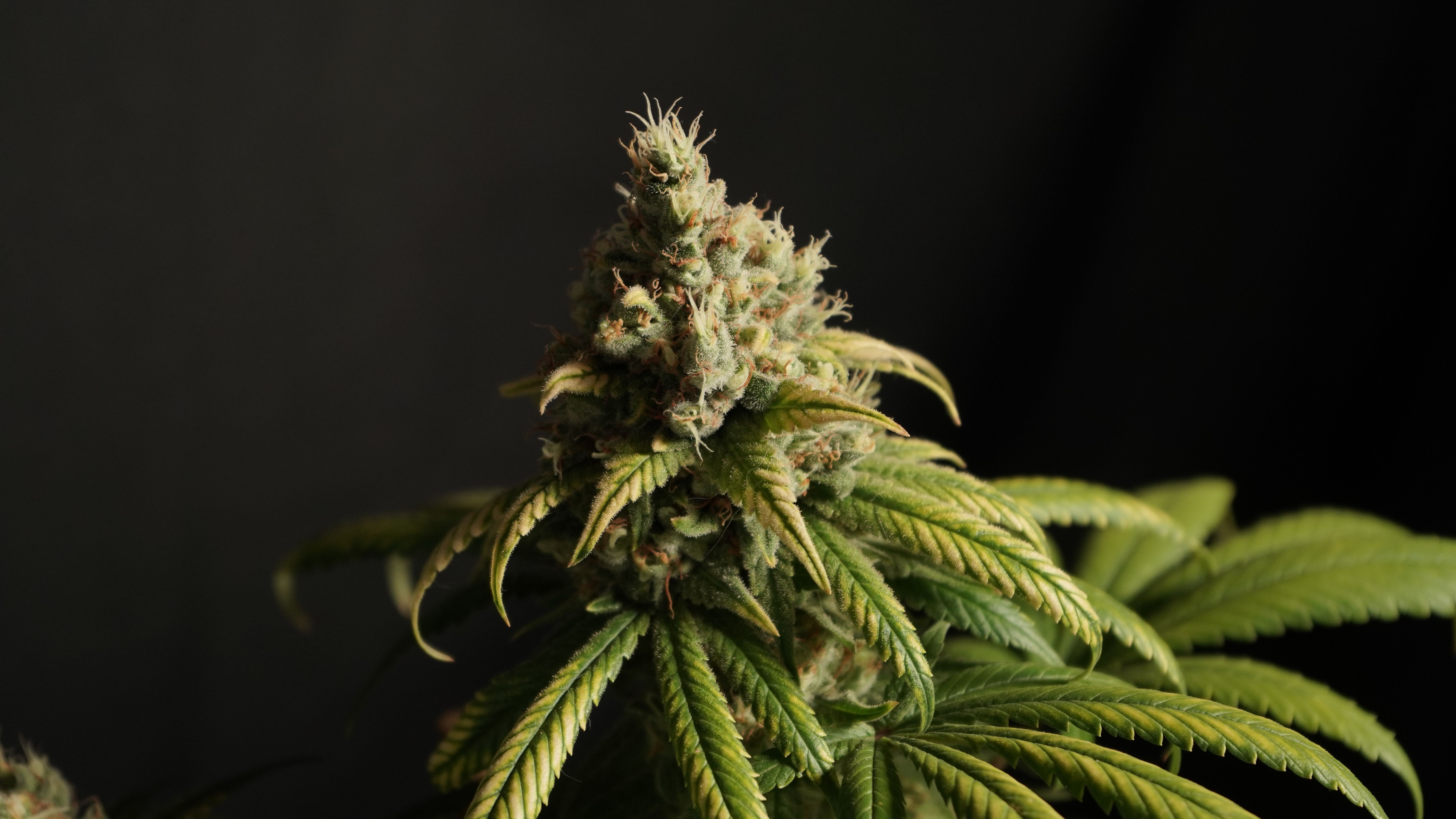
Myrcene is a volatile monoterpene found in cannabis, hops, lemongrass, mango and many other plants. It is one of the most frequently detected terpenes in cannabis and contributes earthy, herbal and musky aroma characteristics. Research supports its role in cannabis aroma, while claims that myrcene reliably causes sedation or makes THC feel stronger have much weaker human evidence.
What Myrcene Is and Where Else It Occurs
Myrcene, often written as beta-myrcene or β-myrcene, is an acyclic monoterpene. Terpenes are volatile compounds produced by many plants. In cannabis, they form part of the chemical mixture responsible for aroma.
If you have smelled hops, lemongrass or some varieties of mango, you have encountered plants that can contain myrcene. Research has also identified it in bay, verbena, citrus and other botanical sources.
Its concentration varies greatly between plant varieties. This point is important when you read statements such as “mango contains myrcene” or “Kush strains contain myrcene.” The presence of a terpene does not tell you its concentration.
Mango research shows the variation clearly. A study of 25 mango cultivars found large differences in volatile composition. Myrcene represented 58.93% of measured flavour volatiles in one cultivar, while other cultivars were dominated by compounds such as terpinolene, 3-carene, caryophyllene or alpha-pinene.
Cannabis shows similar chemical variation. In one large dataset, myrcene appeared in 89.8% of recorded cannabis flower sessions, making it the most frequently recorded terpene in that dataset.
You should still avoid assuming that every cannabis strain contains high myrcene. Genetics, cultivation, harvest timing, drying, curing and storage can all alter the final terpene profile.
Drying is especially relevant. Myrcene is volatile. Canadian plant science guidance notes that monoterpenes such as myrcene, limonene and pinene can decline during drying, curing and storage. Sesquiterpenes such as beta-caryophyllene can then account for a larger share of the remaining terpene profile.
This helps explain why the same cultivar can show different terpene rankings across batches.
Aroma and Flavour Profile
Myrcene is generally associated with earthy, herbal, musky and mildly spicy aroma notes. Its exact sensory contribution depends on the other volatile compounds present alongside it.
If you are comparing dried flower, myrcene can help explain part of a product’s scent profile when terpene information is available. A myrcene-rich product may lean toward earth, herbs, musk or hop-like notes, though the full aroma cannot be predicted from myrcene alone.
Recent aroma research has made this distinction important. Myrcene, limonene, beta-caryophyllene and terpinolene are often among the more abundant cannabis volatiles, yet researchers have found that minor non-terpene compounds can be major drivers of the distinctive sweet, savoury and other strain-specific aromas people notice.
You should therefore read a terpene profile as part of a larger chemical picture.
For example, two cannabis products can both list myrcene first and still smell different. One may contain substantial limonene. Another may contain more caryophyllene, pinene or minor volatile compounds. Their total terpene concentrations can also differ.
Canadian labels do not have to display terpene percentages. Health Canada permits producers to include a terpene profile as optional product information as long as the information follows federal requirements and is not false or misleading.
When terpene percentages are shown, they can give you useful batch-specific information. The actual package is more useful than assuming a strain carries the same terpene profile every time.
The Mango Claim and What the Evidence Supports
A common cannabis claim says that eating mango before using cannabis can make THC feel stronger, make effects arrive faster or make them last longer because mango contains myrcene.
Current evidence does not establish that claim in humans.
Mango can contain myrcene, but its concentration changes significantly between cultivars. Some mangoes contain substantial myrcene while others are dominated by different volatile compounds.
The second part of the claim requires stronger evidence. Myrcene would need to alter THC absorption, distribution, receptor activity or another relevant process in humans at amounts realistically obtained by eating mango.
Current cannabis reviews do not provide controlled human evidence showing that eating mango before cannabis reliably increases THC intoxication or changes THC pharmacokinetics.
Recent reviews of cannabis terpenes also describe major gaps between popular terpene claims and clinical evidence. For myrcene specifically, research concerning relaxation and related effects remains largely preclinical.
You can therefore separate the claim into two parts.
| Claim | Current evidence |
|---|---|
| Mango can contain myrcene | Supported |
| Every mango contains a large amount of myrcene | Not supported |
| Cannabis commonly contains myrcene | Supported |
| Eating mango raises cannabis myrcene exposure enough to alter THC effects | Not established |
| Eating mango reliably makes a cannabis high stronger | Not established |
| Eating mango reliably makes THC act faster | Not established |
| Eating mango reliably makes cannabis effects last longer | Not established |
Eating mango as food is separate from claims about cannabis intoxication. You should not rely on mango to control, intensify or predict a cannabis experience.
Reported Effects and the Entourage Effect Debate
Myrcene is commonly linked with relaxation, sedation and the cannabis term “couch-lock.” Those associations appear frequently in cannabis culture and product descriptions.
Human evidence remains limited.
A recent review of cannabis terpenes found no direct human data establishing anxiolytic or antidepressant effects from myrcene. Sedative and related findings have largely come from animal or laboratory research.
A systematic review of terpene interactions also found that research has not established a reliable synergistic effect between myrcene and cannabinoids. The authors found no proven clinical terpene entourage effect and called for further trials.
That is important when you see claims that myrcene automatically makes THC more sedating.
Cannabis experiences can vary with THC concentration, CBD concentration, dose, consumption method, prior cannabis exposure and individual response. A terpene percentage cannot reliably predict the result by itself.
The entourage effect is a proposed interaction among cannabinoids, terpenes and other cannabis compounds. Laboratory and preclinical research has examined many possible interactions. Clinical evidence remains limited and findings are inconsistent. A major scoping review found that claims of a cannabis entourage effect are still supported by contradictory and incomplete pharmacological evidence.
You can still use terpene data as practical chemical and sensory information. If a vape product lists myrcene, for example, that information can help describe its formulation or expected aroma profile. It does not establish that the product will cause a specific mood or level of sedation.
Heating also changes terpene chemistry. Research on cannabis concentrate vaporization has examined thermal breakdown products from myrcene and other cannabis compounds. Temperature and device conditions can change the volatile compounds produced during heating.
For that reason, terpene content in the original product and the chemistry of inhaled aerosol should not be treated as identical.
Strains Where Myrcene Dominates
There is no permanent list of myrcene-dominant strains because terpene profiles can shift from one producer and batch to another.
Current Canadian regulated product information does provide useful examples.
Florida Sunrise has been listed in Canada with myrcene identified as its dominant terpene, supported by limonene and ocimene.
Strawberry N’ Mintz has appeared with myrcene among its leading terpenes alongside caryophyllene and pinene.
Citroli has been listed with myrcene, limonene and caryophyllene among its dominant terpenes.
Master Mazar Kush has also appeared in Canadian product data with myrcene among the dominant group alongside caryophyllene and humulene.
These examples show why you should check batch information instead of building a permanent “myrcene strain” list.
| Strain example | Reported Canadian terpene information |
|---|---|
| Florida Sunrise | Myrcene reported as dominant |
| Strawberry N’ Mintz | Myrcene reported among leading terpenes |
| Citroli | Myrcene reported among dominant terpenes |
| Master Mazar Kush | Myrcene reported among dominant terpenes |
Canadian research also shows that named cannabis categories do not map cleanly onto one terpene. A study of cannabis grown under Canadian commercial conditions documented myrcene in several distinct chemovars alongside pinene, caryophyllene, limonene, linalool and humulene.
You should therefore treat myrcene dominance as a batch characteristic first.
If you specifically want a myrcene-forward product, check the current package or product data for
- Myrcene’s position in the terpene list
- The stated myrcene percentage when available
- Total terpene content when available
- Packaging date
- Product format
- Total THC and Total CBD
Health Canada permits terpene profiles as optional label information, so some legal products will provide far more detail than others.
Myrcene as a Practical Product Comparison Tool
Myrcene is most useful when you treat it as one measured part of a cannabis product.
If aroma is important to you, compare myrcene with the other leading terpenes. A myrcene and caryophyllene combination can produce a different sensory profile from myrcene paired with limonene or pinene.
If a product lists no terpene information, the strain name alone cannot confirm that myrcene dominates. Health Canada notes that strain names are optional information and do not carry standardized scientific meaning.
You should also avoid using myrcene concentration as a strength indicator. THC and CBD are cannabinoids. Myrcene is a terpene. A product with more myrcene does not automatically contain more THC.
When comparing products, read Total THC and Total CBD separately from the terpene profile.
For cannabis concentrates, extraction and processing can change the relationship between the original flower chemistry and the final product. Check the finished product information instead of applying flower data to the concentrate.
The same principle applies across strains. Myrcene can be common in cannabis without acting as a fixed marker for indica, sativa or hybrid classifications. Chemical testing gives you better batch-level information than broad strain categories.
Cannabis Delivery Across Windsor and Essex County
High Vibes is a cannabis delivery service serving Windsor, Kingsville, Comber, Belle River, Leamington, Amherstburg and Essex. We carry changing cannabis selections, and our customers can use available cannabinoid and terpene information to compare current products.
Check our current selection for available strains and formats.
Disclaimer: The content provided is for general informational purposes only and should not be relied upon as medical, legal or professional advice. For any health related concerns, consult a qualified healthcare professional. It is the responsibility of each individual to understand and comply with all applicable laws and regulations.