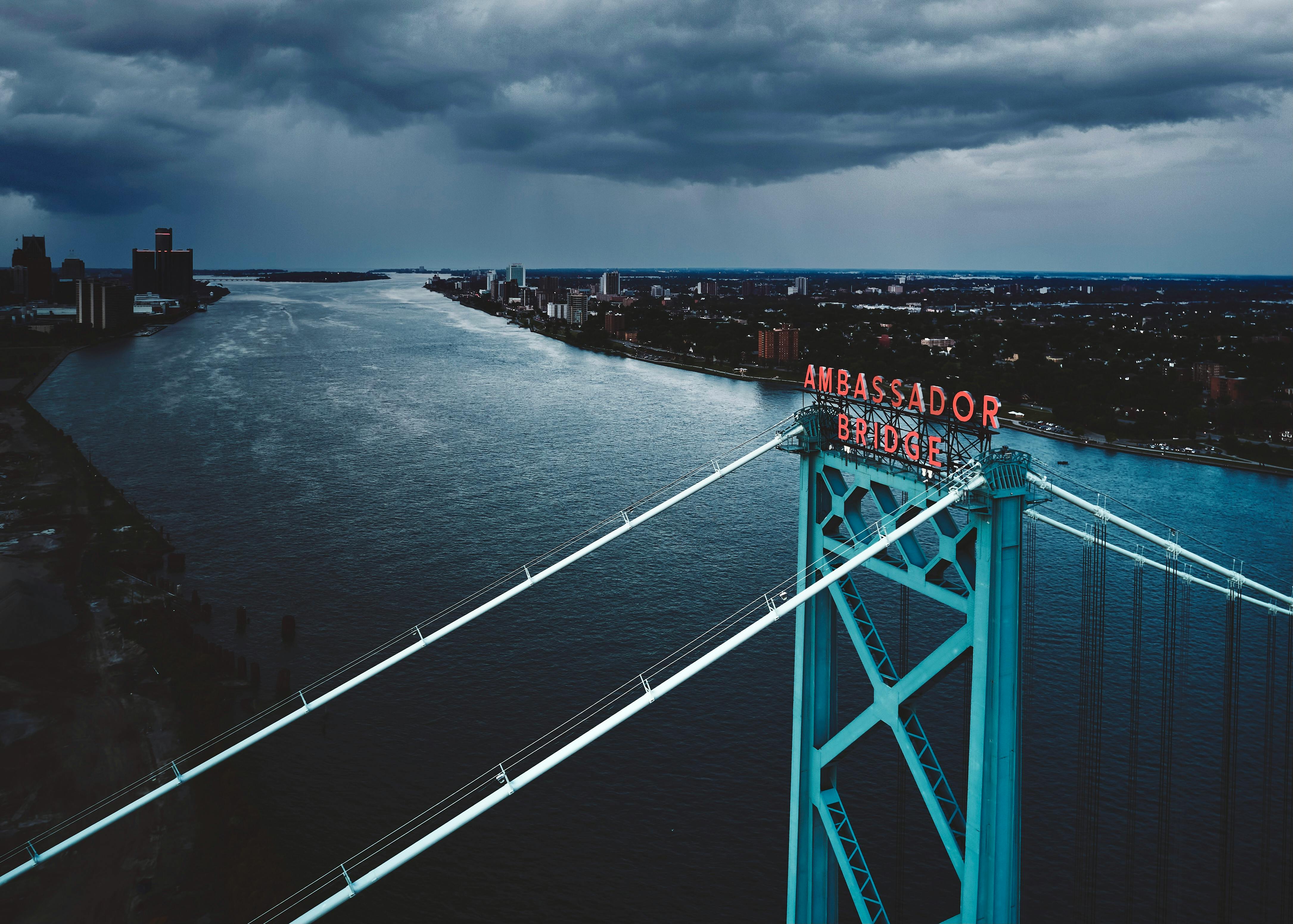
Taking cannabis across the Ambassador Bridge is illegal under both Canadian border rules and U.S. federal law, even if the product was bought legally in Ontario and even if Michigan allows adult use under state law. Canada Border Services Agency says it remains illegal to bring cannabis across the border in either direction, and U.S. Customs and Border Protection says possession of any amount of marijuana remains unlawful under federal law at the border.
Federal Law Versus Michigan State Legalization
Michigan allows adult use marijuana under state law, including personal possession for adults 21 and older. That state rule does not change the rule at the international border. CBP enforces federal law at ports of entry, and CBP has stated that all marijuana imports are prohibited and that travelers should not cross the border with any amount at all.
For Windsor drivers, that means a legal purchase in Ontario does not stay legal once the trip turns into a border crossing. CBSA says not to bring it in and not to take it out, and its current border checklist states that cannabis in any form, including oils with THC or CBD, is illegal to take across the border without a Health Canada permit or exemption.
This rule applies to more than loose cannabis. It can cover flower, edibles, vapes and concentrates. The product type does not change the border rule. The key fact is that it is cannabis or a cannabis product crossing an international line.
What Happens When Guards Find a Gram in Your Car
If officers find even a small amount in your car, the trip can stop immediately. CBP has publicly stated that seizure and civil monetary penalties remain in effect for possession of any amount of marijuana at the border. CBSA says cannabis discovered at the Canadian border may be confiscated and that a traveler who fails to declare it may also face a monetary penalty.
That risk is not limited to a bag in plain sight. Border officers inspect trunks, glove boxes, door pockets, luggage and cargo areas. A forgotten pre-roll tube, edible wrapper, vape cartridge or cannabis smell in the vehicle can trigger secondary inspection. CBP’s public advice is blunt and simple. Do not cross the border with any amount of marijuana at all.
For drivers in Windsor, the practical lesson is plain. Clean the car before approaching the bridge. Check the trunk, center console, bags and jacket pockets. Remove old packaging and cannabis residue from recent trips. A legal purchase in Canada can still create a border seizure and a federal problem once the vehicle enters the checkpoint lane.
Answering Questions About Past Personal Usage
Border officers can ask direct questions during inspection, and false answers can create separate legal trouble. That does not mean every question about past personal use leads to the same result, but it does mean the issue is serious. U.S. immigration guidance states that an applicant may be inadmissible on criminal grounds if the person has admitted committing certain controlled substance violations. State Department guidance also says a visa ineligibility finding can be based on a conviction, an attempt or conspiracy, or on a valid admission in some controlled substance cases.
For a Windsor resident heading to Detroit, the safest public rule is to avoid carrying cannabis and avoid treating the inspection as casual small talk. If an officer asks about current possession, prior transport, reason for travel or work tied to cannabis, the answers can affect the inspection. CBP’s public FAQ also states that a Canadian traveler found to be coming to the United States for a reason related to the cannabis industry may be deemed inadmissible.
Past personal use questions can feel broad, and officers have discretion during inspection. Public U.S. government sources do not state that every past use admission leads to a permanent ban. They do show that drug-related admissions can carry immigration consequences in some cases. That is enough reason to take the interview seriously and avoid walking into the lane with cannabis in the vehicle, in your bag or on your person.
The Risk of Losing Your NEXUS Pass Permanently
NEXUS works only for low-risk travelers who follow customs and immigration rules. CBSA says you can lose NEXUS membership if an inspection shows that you violated NEXUS terms and conditions, and it also says eligibility requires that you have not violated customs, immigration or agriculture laws.
CBP’s NEXUS eligibility page says applicants may be ineligible if they have been convicted of a criminal offense or have customs, immigration or agriculture violations. CBP also states on its trusted traveler denial page that revoked members receive written notice of the reason.
Public CBP enforcement releases show how seriously trusted traveler violations are treated. In one release, CBP reminded travelers that marijuana possession remains illegal under federal law and noted that trusted traveler privileges may be revoked. In another Detroit case tied to the Ambassador Bridge, CBP said violations result in immediate revocation from the trusted trader program. Those releases are not the same as a universal lifetime rule for every case, but they do show that trusted status can be lost fast once cannabis is found at the border.
If you rely on NEXUS for work or frequent travel, the practical risk is bigger than a single delayed crossing. One cannabis mistake at the border can cost fast-lane access and trigger a long process with no promise of reinstatement. That is why Windsor drivers should treat the Ambassador Bridge as a zero-cannabis zone every time, no exceptions.
Conclusion
For Windsor residents who want to keep purchases on the Canadian side, High Vibes is the cannabis delivery service for the city, and we invite you to check our Windsor service before your next local order.
Disclaimer: The content provided is for general informational purposes only and should not be relied upon as medical, legal or professional advice. For any health related concerns, consult a qualified healthcare professional. It is the responsibility of each individual to understand and comply with all applicable laws and regulations.